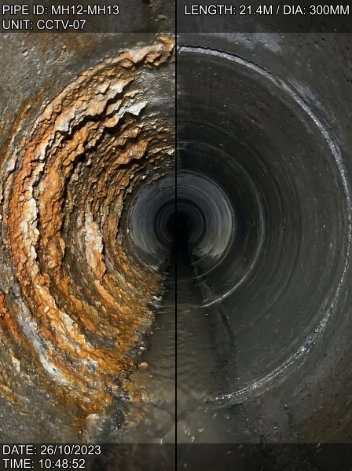
If your Plano TX home was built before 1995, there is a high probability that your drain pipes are cast iron running beneath your concrete slab foundation. Understanding what this means for your home's plumbing — and what warning signs to watch for — can save you thousands of dollars and prevent serious water damage.
Why Plano TX Homes Have Cast Iron Drain Pipes
Cast iron was the standard drain pipe material for residential construction in the United States from roughly the 1940s through the early 1990s. When most of East Plano, Central Plano, and large areas of West Plano were developed in the 1960s through 1980s, cast iron was what every builder used. PVC pipe as a drain material didn't become truly standard in Plano area construction until the mid-1990s.
This means any Plano home with a build date of 1995 or earlier likely has cast iron drain lines running horizontally under the slab, connecting your kitchen sink, bathrooms, laundry room, and floor drains to the main sewer line that exits the house to the city sewer system.
How Cast Iron Pipes Fail Over Time
Cast iron drain pipes have a functional lifespan of approximately 50 to 75 years under normal conditions. However, in Plano TX, NTMWD's hard water at 17.2 grains per gallon significantly accelerates the corrosion timeline. The combination of acidic wastewater and high mineral content causes the interior of cast iron pipes to corrode at an accelerated rate.
The failure modes for cast iron pipes in Plano TX typically follow this progression:
- Interior scale buildup: Mineral deposits narrow the pipe diameter, causing slow drains and recurring clogs at multiple fixtures simultaneously.
- Interior corrosion: The pipe wall develops rust and rough patches that catch grease and debris more aggressively, compounding the buildup problem.
- Pipe wall thinning: As corrosion advances, the pipe wall becomes thinner and structurally weaker.
- Cracking and collapse: Under slab movement — common in Plano's clay soil conditions — thinned cast iron pipes can crack, separate at joints, or collapse partially.
Warning signs of cast iron failure: Multiple slow drains at the same time, gurgling sounds in toilets when using other fixtures, sewage odor inside the home, soft spots in flooring near drain locations, and recurring clogs within weeks of professional clearing.
Camera Inspection — The Only Way to Know for Sure
The only reliable way to assess the condition of your cast iron pipes under the slab is a professional CCTV drain camera inspection. A camera fed through your cleanout access point allows our technicians to view the actual interior condition of your pipes — corrosion level, scale buildup, any cracks or pipe belly sections where water pools.
DrainPro Plano recommends a proactive camera inspection for any Plano TX home over 25 years old, especially before buying a home or if you're experiencing any of the warning signs listed above. A camera inspection typically costs approximately $125 to $200 — a small investment compared to discovering a collapsed sewer line after purchase.
Hydro Jetting for Cast Iron Maintenance
For cast iron pipes in good structural condition, hydro jetting every 3 to 5 years is an effective maintenance strategy. High-pressure jetting removes the mineral scale and grease that accumulates on corroded cast iron walls, restoring full flow capacity and slowing the corrosion process by removing standing debris.
We always perform a camera inspection before hydro jetting older cast iron systems to confirm the pipe can safely handle the pressure. If structural damage is found, we'll explain your repair options before any work begins. Call (972) 782-5256 to schedule your inspection today.